With all due
respect to
Coming to America
Cleo McDowell — who owns a replica McDonald’s with a logo featuring gold
arcs
, not arches, and a Big
Mick
burger, not a Big Mac – John Amos’ two most iconic roles came more than a decade prior, in the Seventies. In 1974, CBS debuted
Good Times
In this series, Amos and Esther Rolle portrayed James and Florida Evans, who were trying hard to support their children amidst challenging conditions in a Chicago housing project. Following his dismissal from the show due to grievances about how James and Florida’s genuine issues were getting overshadowed by their teenager son JJ’s exaggerated behavior, he secured the main part in an influential television miniseries.
Roots
where he portrayed the elder incarnation of Kunta Kinte, an Africa-born enslaved person, who was made to respond to the name Toby by his white captors.
Although the time periods and backgrounds varied greatly, the characters portrayed by him remained unmistakably John Amos’s creations: robust, reliable, and capable of being either formidable or tender, based on circumstances.
Amos, who passed away on August 21,
confirmed today
His family inherited their striking physique from him. Long before he entered the entertainment industry, he aspired to be a professional footballer, playing for the Colorado State Rams during his college years. He also participated in tryouts with both the Denver Broncos and the Kansas City Chiefs of the former American Football League. Additionally, he competed on various teams within the lower tiers of professional football, such as the Canton Bulldogs in the United Football League. It’s said that Chiefs coach Hank Stram once remarked to him, “You’re not just a football player; you’re a man attempting to play football.”
However, he became quite the remarkable person once he abandoned his aspirations of becoming an athlete and ventured into acting instead. During the early 1970s, he took up minor parts in television series—most prominently a consistent role on
The TV show “The Mary Tyler Moore Show”
As the amiable and cool-headed WJM meteorologist Gordy Howard—and in advertisements. (He probably leveraged his experiences)
this musical McDonald’s ad
When the moment arrived for McDowell to perform, Esther Rolle’s portrayal of Florida emerged as an early standout character contrasting with Bea Arthur’s role.
Maude
, the sitcom’s producers, including the legendary Norman Lear, decided to give her a husband – and, at the end of
Maude
Season Two, to provide the pair with their own series.
Good Times
It was among the earliest TV sitcoms focused on a Black nuclear family. The show aimed to follow a style comparable to that of’autres’.
Maude
and
All in the Family
, with Florida and James wrestling with poverty, racism, and other social ills. Together, they provided a calm anchor in the tumultuous lives of their kids – and for audience members dealing with their own struggles in an America not too far removed from the passage of the Civil Rights Act of 1964. Amos could deftly trade punchlines with his co-stars, particularly whenever James was expressing disapproval towards the lazy JJ (played by comedian Jimmie Walker). But to viewers who had grown up only seeing white actors get to play idealized sitcom dads, James’ mere existence – coupled with the warm strength with which Amos played him – made him feel historic.
However, it was JJ—and his often-shouted catchphrase, “DYN-O-MITE!”—that elicited the strongest reaction from audiences, causing the program’s focus to pivot towards him. This left James and Florida casted as frustrated foils within what should have been their narrative arc. Both Rolle and Amos voiced strong objections to this change multiple times. She usually expressed her discontent publicly, whereas he did so through increasingly antagonistic means. (“In those days, I wasn’t very diplomatic,” he admitted later, noting how his superiors grew weary of threats made against them due to his humor.) After three seasons, Amos was dismissed, and at the start of season four, the Evans household faced calamity: Off-screen, James perished in a vehicular crash while seeking work opportunities in Mississippi. Following this incident, Rolle exited the series too, making JJ appear far less engaging now that neither parental figure remained to anchor the storyline; consequently, viewership numbers started declining sharply.
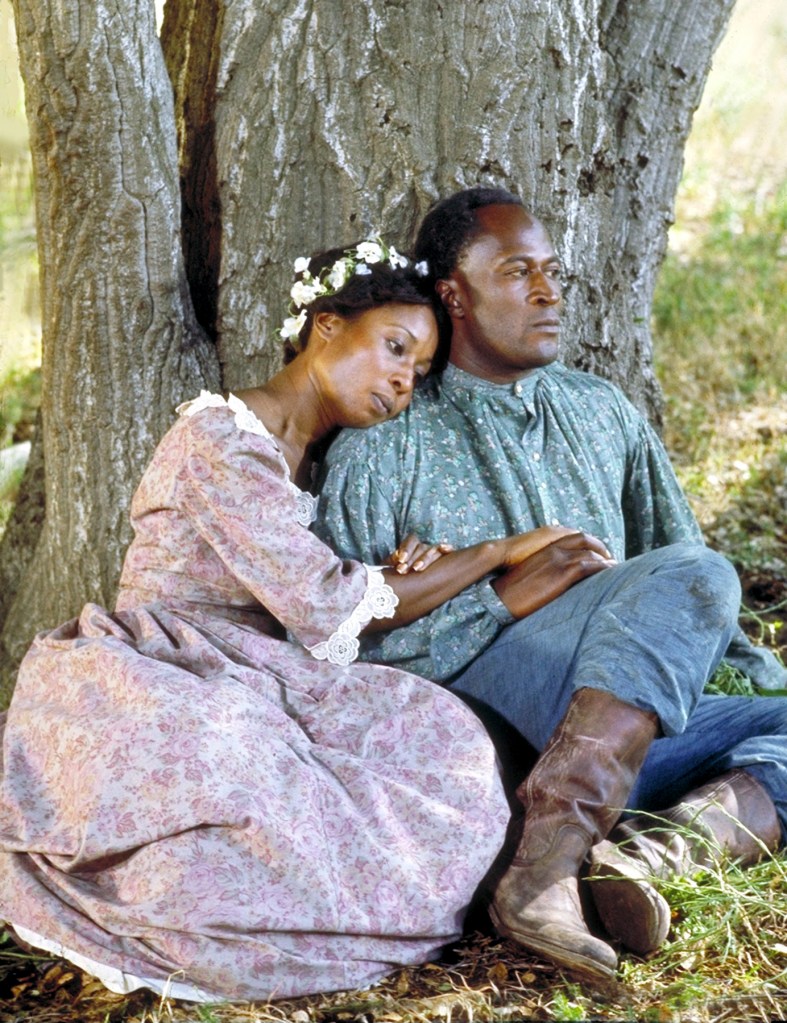
There was a bright side to Amos’ unforeseen job loss: He had time to take on starring roles.
Roots
, a miniseries adaptation of Alex Haley’s novel chronicling America’s dark past of slavery, told from the perspective of Kunta Kinte and his descendants. LeVar Burton portrayed the young, rebellious Kunta in the initial two episodes until James Earl Jones stepped in to portray the elder version, who seems more accepting of his captivity but continues to devise plans for freedom and returning to Africa. The book was immensely popular, and its television rendition surpassed expectations, drawing over half of the U.S. audience at one point or another. Amos had once harbored hopes that
Good Times
Would spark discussions among Americans about both historical and contemporary challenges faced by the Black community;
Roots
He not only lived that dream but exceeded all expectations.
Not many performers could surpass taking on the main part in such an enormous production as this.
Roots
, and Amos understandably couldn’t manage to.
Like James Earl Jones
, who would portray Amos’ in-law in both
Coming to America
and its 2021 sequel
Coming 2 America
, Amos would find himself caught in a casting conundrum throughout much of his career: He didn’t quite get cast as a lead, yet his formidable presence and personality made it difficult for directors to place him in typical supporting roles. Often, he was brought in just to add weight to others’ narratives. (Even though he excelled at this role too, such as when portraying Admiral Fitzwallace, the Chairman of the Joint Chiefs of Staff, in the film.)
The West Wing
He has had notable roles from time to time—he is hilariously entertaining as Cleo McDowell and convincingly fought against Bruce Willis as one of the antagonists in
Die Hard 2
– However, one of his limited chances to take the lead role in a production was an unexpected meeting with Norman Lear, occurring almost two decades after Lear had dismissed him.
Good Times
.
704 Hauser
was an
All in the Family
This spin-off features Amos as a working-class individual residing in the former home of Archie Bunker in Queens. The central dynamics have been reversed; Amos is portrayed as a vocal liberal, whereas his son takes on a conservative stance (paired with a white spouse acted by a young Maura Tierney). Despite these efforts, only six episodes were produced, including one that remained unaired.
To some extent, Amos entered the acting world at an ideal time. During the 1970s, television was finally ready—sometimes even enthusiastic—to portray African American narratives after largely attempting to overlook them throughout much of its history.
Good Times
It felt like the perfect show for this moment, despite it somehow slipping out of Amos’ control.
Roots
is probably the most important television show ever made, and among the best. He was at the heart of both. In other ways, Amos was ahead of his time, spending most of his career in an industry that still didn’t know quite what to do with a Black actor with a deep voice and a football player’s physique.
Nevertheless, how many actors manage to secure roles as enduringly iconic as James Evans or Kunta Kinte, not to mention securing both, and truly excel in their performances?
More from Rolling Stone
- ‘He Never Stopped Writing’
- Evan Wright: Honoring the Finest Contributions of the Renowned Rolling Stone Author
- Farewell to Richard Simmons, the Original Influencer
